Prevent, respond, analyze and sustainably improve workplace safety: incident management remains a central pillar of any high-performing EHS approach. In 2026, the most mature organizations no longer simply react to events — they rely on a structured methodology to turn every incident into a lever for continuous improvement.
What is an incident?
An incident refers to any unplanned event that resulted in, or could have resulted in, injury, property damage or environmental harm. This includes actual accidents, near misses and hazardous situations identified before they escalate. Treating every near miss with the same rigor as an actual accident is one of the most reliable markers of a mature safety culture.
The 7 best practices to adopt in 2026
Effective incident management relies on a coherent chain of actions, from immediate containment to long-term trend analysis.
- Secure the area: immediately isolate the affected area to prevent further damage and protect people nearby.
- Report promptly: report the incident as soon as it occurs, without delay, to enable a responsive and well-documented follow-up.
- Record objectively: document the facts factually, without interpretation or judgment, based on verifiable evidence.
- Adapt the investigation: tailor the level of investigation to the severity of the incident, mobilizing the right skills and tools.
- Identify root causes: go beyond immediate causes to understand the underlying organizational and systemic factors.
- Corrective actions: define concrete actions with owners and deadlines, then track their implementation through to closure.
- Analyze trends: consolidate incident data over time to detect recurrences and guide prevention priorities.
Mistakes to avoid
Certain practices durably undermine the effectiveness of an incident management system:
- Under-reporting near misses out of fear of sanctions or lack of awareness
- Stopping at the immediate cause without investigating root causes
- Closing a corrective action without verifying its real effectiveness in the field
- Keeping incident data scattered, without consolidation or overall analysis
- Failing to communicate lessons learned to the relevant teams
Digitizing incident management with RegAlertCI
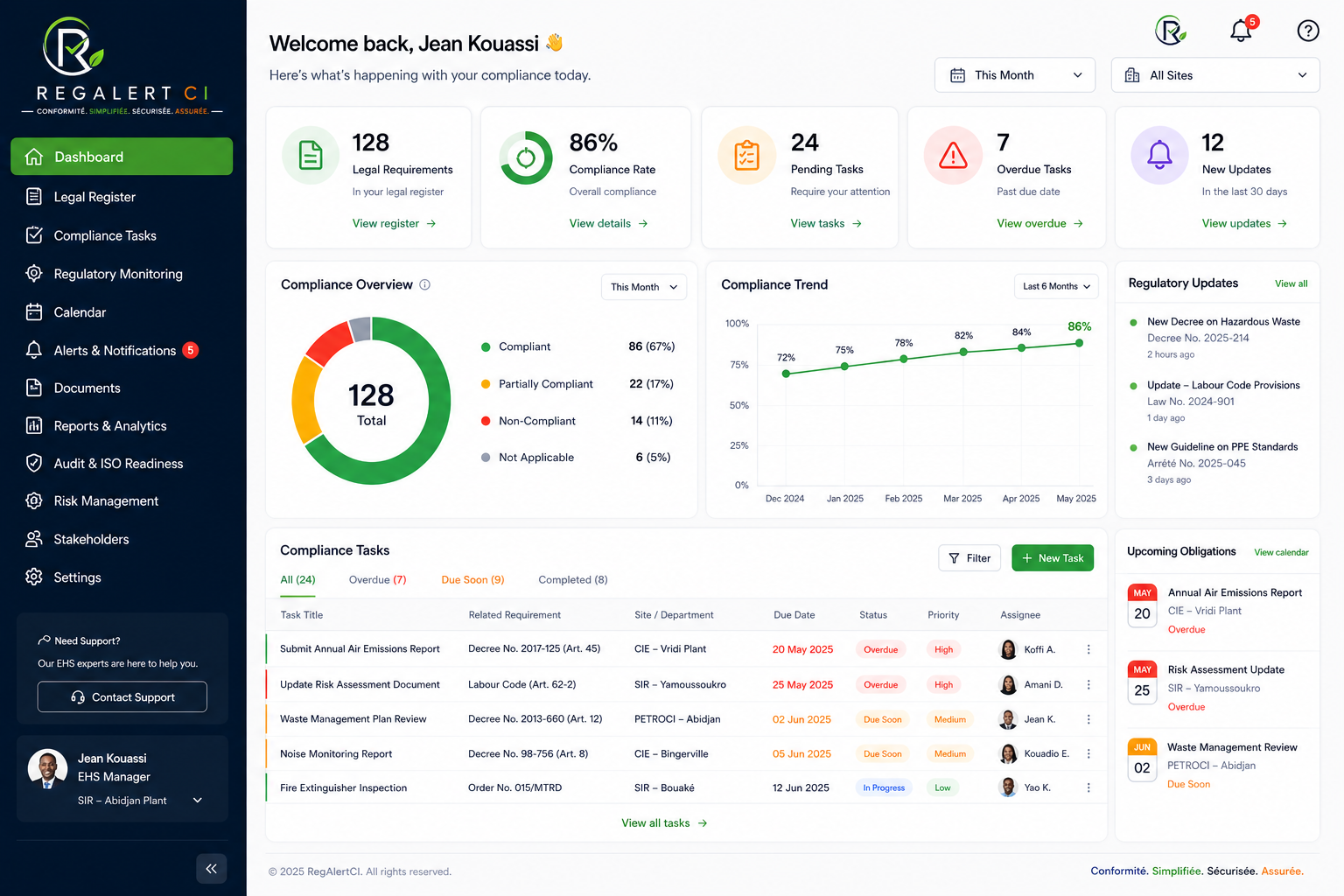
RegAlertCI enables organizations to structure the entire incident lifecycle within a single platform: reporting in a few clicks, investigation tracking, assignment of corrective actions to the right owners, and data consolidation for reliable trend analysis. This digitization reduces processing time, secures traceability and strengthens the organization's ability to demonstrate risk control during audits.
Key takeaway
Effective incident management follows a simple, continuous logic: REPORT → ANALYZE → CORRECT → PREVENT. Each step feeds into the next and helps sustainably reduce the recurrence of undesirable events.
Move to more effective incident management
Want to structure your incident management process and turn every event into an improvement opportunity? Contact our team to discover how RegAlertCI can support your organization.
Subscribe to our newsletter
Receive our upcoming publications directly by email. No spam, just relevant regulatory content.
Subscribe